Why Laravel & React Stack Dominates Web Apps
If you are building or upgrading a business application in 2026, the technology choices you make now will shape how easily your product scales, how fast your team ships, and how much it costs to maintain for years. The industry has largely converged on a clear, proven architecture, and it is the exact stack VTechnocrat builds on every day.
API-First & Cloud-Native
This guide explains what that stack is, why it won, and what trends every business should factor into its next build. The short version: a Laravel API backend paired with a React frontend, deployed on cloud or edge infrastructure, with AI integrations via API and security built in from day one.
Laravel on the Backend
React on the Frontend
"The Laravel and React stack does not dominate because it is the newest option. It dominates because it solves the real problems businesses face at scale: maintainability, hiring and ecosystem."
Why API-First Won
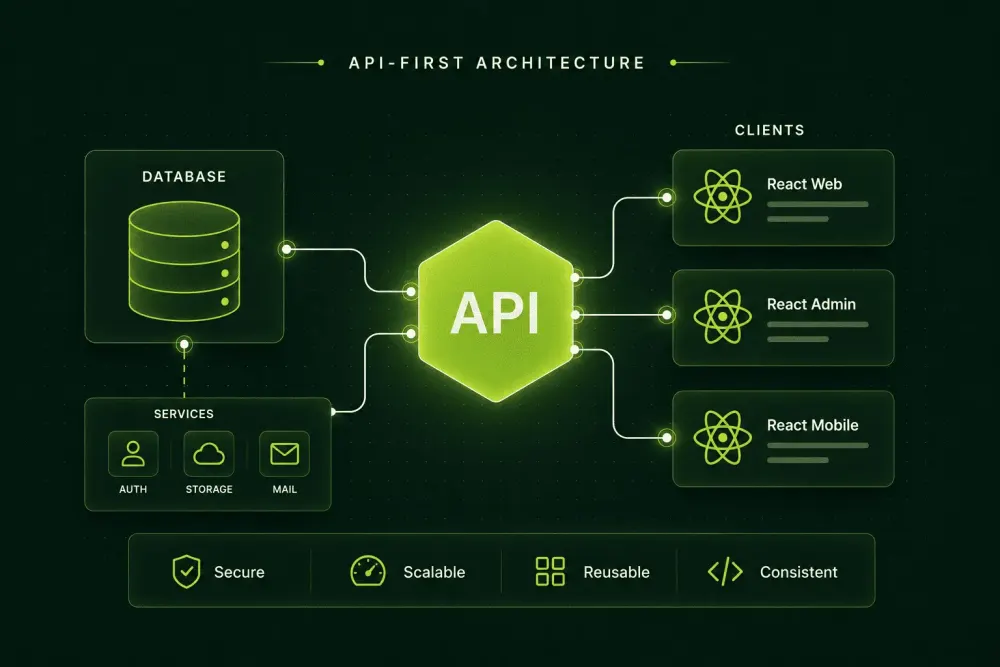
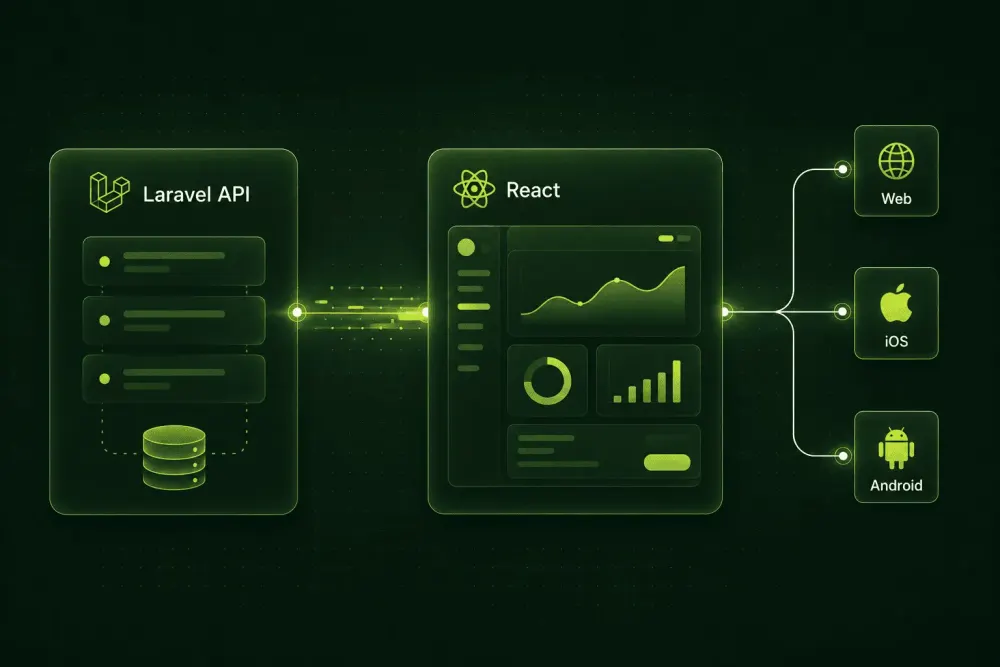
API-first means building your backend as well-defined endpoints before any frontend. One Laravel API can serve a React web app, an iOS app, an Android app and third-party integrations at once. You build the business logic once and every client benefits, while API and frontend scale independently.
- Cloud-Native by Default
- Edge Computing & Serverless
- Security From Day One (MFA, OAuth, JWT)
Cloud-native is now the default, with edge computing and serverless cutting latency and cost. AI is embedded directly into the product rather than bolted on. Security goes beyond the basics with MFA, OAuth, JWT and API protection layers, while TypeScript has become the standard for maintainable code.
The Trends Shaping Business Web Apps